60 × 60 rectified porcelain from £13.99/m²60 × 120 from £14.99/m²Bathroom packages from £1,000See offers →

Straight, shower baths & freestanding

Baths

Every shape we stock, with the sizes, because a bath is bought by the millimetre. Worth seeing in person, because the difference between a thin shell and a reinforced one is something you feel rather than read.

Reinforced and standard acrylic, side by side

The look

Baths in finished rooms

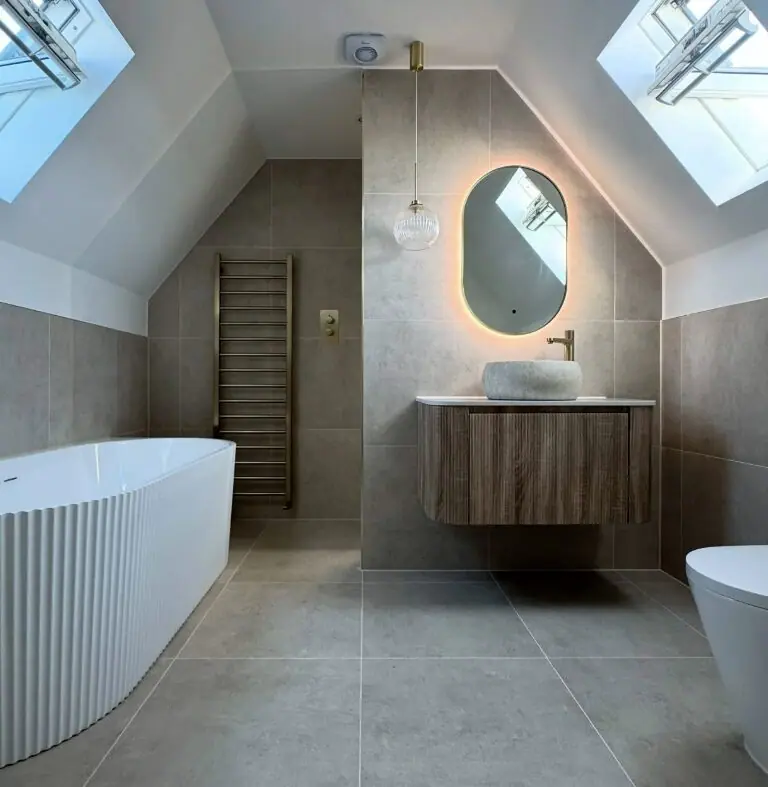
Loft bathroom with a freestanding bath, oval LED mirror and white column radiator
Freestanding bath, oval LED mirror and a white column radiator
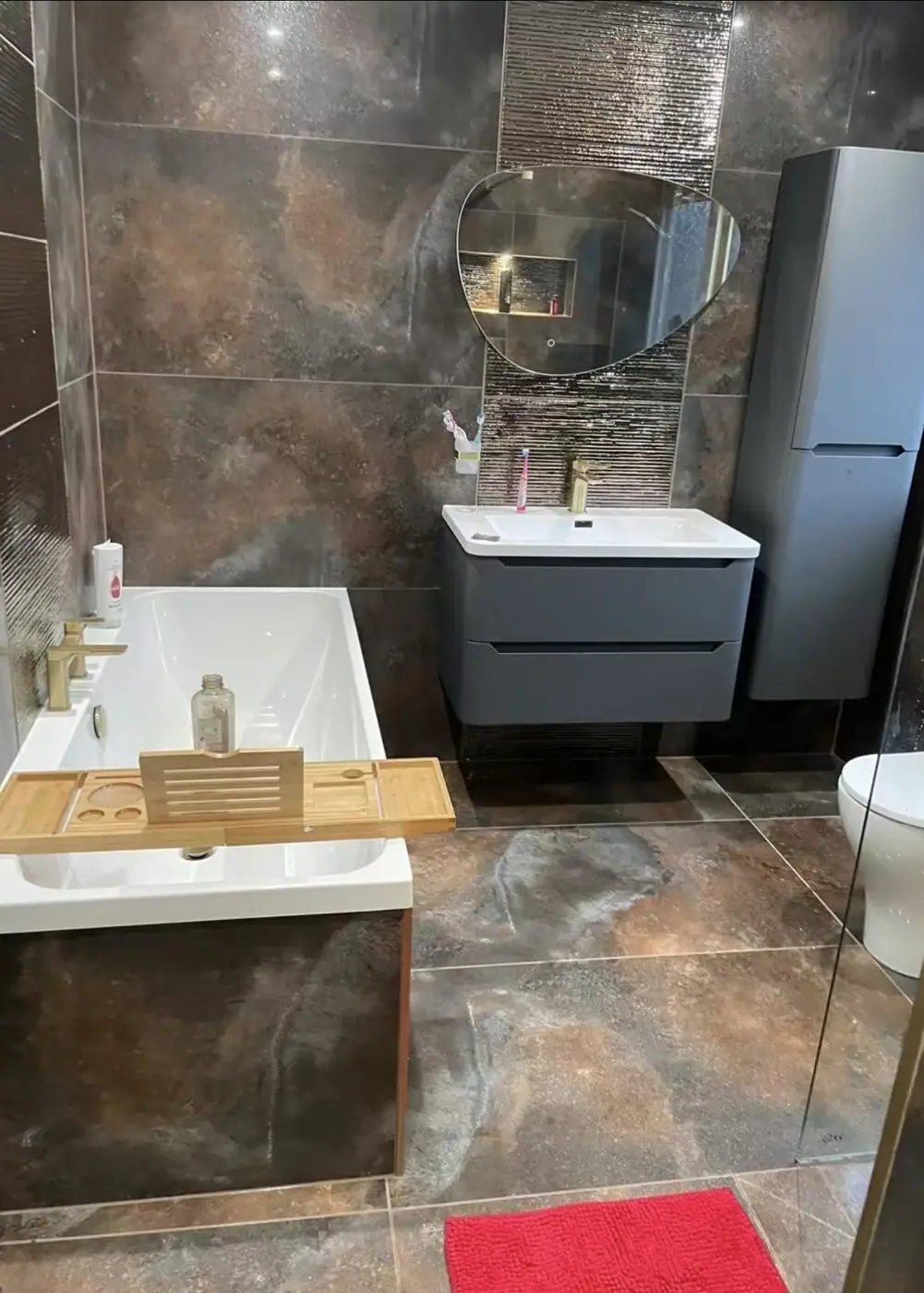
Bathroom in bronze onyx-effect porcelain with a bath and wall-hung vanity unit
Bronze onyx-effect porcelain on walls and floor, with a wall-hung vanity
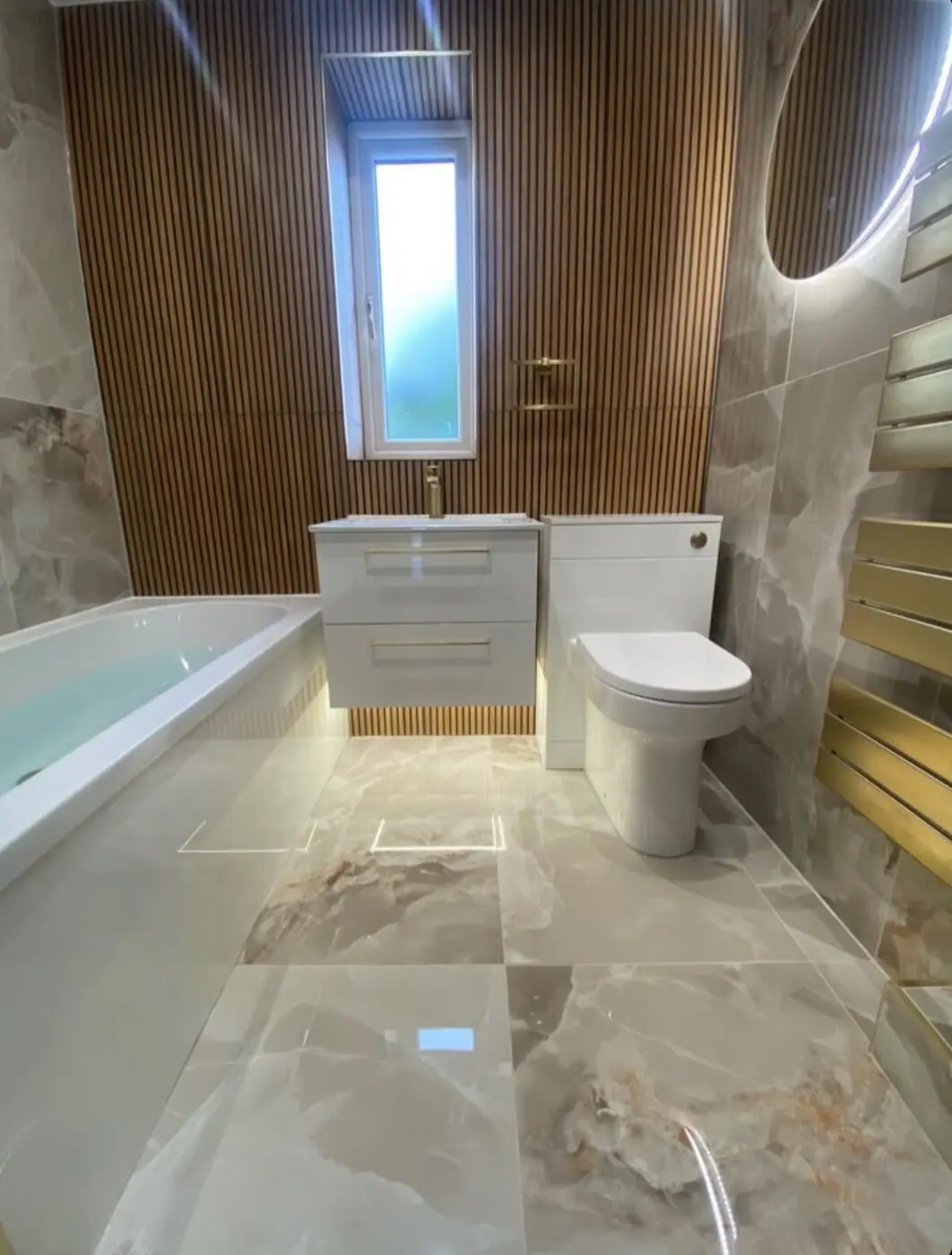
Bathroom with marble-effect porcelain floor, fluted wall panelling and a bath
Marble-effect porcelain floor with a fluted panel and bath

Latest offers & newest designs

New stock lands most weeks and offers change — both go straight onto our Facebook and Instagram. Follow along, or ring the showroom for a price on your quantities.

Straight baths: the sizes

1700 × 700mm is the standard and fits the great majority of UK bathrooms, which is why it is the size with the most choice and the keenest price. 1700 × 750 gives a bit more width if the room allows. Below that, 1600 and 1500 × 700 go into small rooms and box rooms, and above it 1800 × 800 is the one for anyone over six foot. Measure the alcove wall to wall before you fall for anything.

  • 1700 × 700 — the standard, most choice, keenest price
  • 1700 × 750 and 1700 × 800 where there is width
  • 1600 and 1500 × 700 for small rooms
  • 1800 × 800 for taller people and bigger rooms
  • Single-ended: taps at one end, back rest at the other
  • Double-ended: taps in the middle, two back rests, two people
Shower baths: P-shape and L-shape

For the bathroom that has to be a bath and a shower. P-shape curves out at the shower end to give more standing room and takes a curved screen. L-shape squares off at the shower end for a cleaner modern look and a flat screen. Both come left- or right-handed depending on which end the taps and the shower go, so bring a sketch of the room with the door and window marked.

  • P-shape, usually 1700 × 700 widening to 850 at the shower end
  • L-shape, 1700 × 700 widening to 850, square end
  • Left-hand and right-hand versions of each
  • Matching curved or flat bath screens
  • Front panels shaped to match
  • Reinforced options in both shapes

Carron and Carronite

Carronite is Carron Bathrooms' trade name for reinforced acrylic, and the name has stuck to the whole category the way Hoover stuck to vacuums. What it describes is a bonded layer under the acrylic shell that stops it flexing underfoot and helps it hold heat. We stock Carron, including Carronite, alongside standard acrylic so you can press on both.

  • Carron baths including the Carronite range
  • Standard acrylic alongside it, so you can press on both
  • Steel and stone-composite to order
  • Feet, cradles and levelling kits included
  • Weight and floor loading checked before you buy

Why reinforced costs more

Every freestanding bath looks the same empty. Filled, a thin acrylic shell flexes underfoot and gives up its heat within minutes, where a reinforced one stays rigid and holds temperature for a long soak. Press on both in the showroom and the difference is obvious in about two seconds. It is not always worth the jump, and we will say so.

  • Reinforced acrylic alongside standard, so you can compare
  • Steel and stone-composite options to order
  • Feet, cradles and levelling kits included
  • Weight and floor loading checked before you buy
  • Waste and overflow specified with the bath

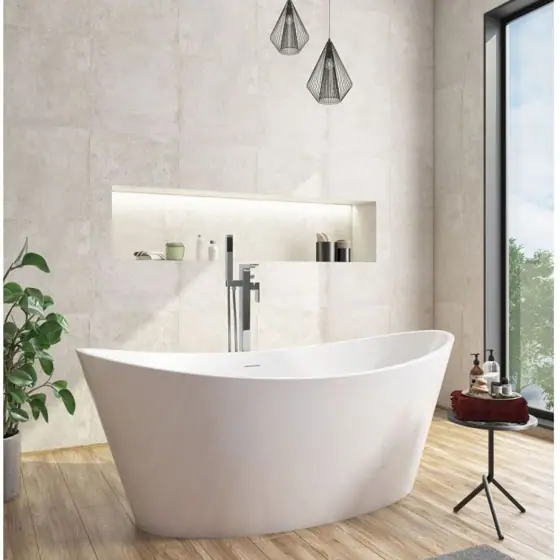
Freestanding shapes on the floor

Shape is driven by the room more than by taste. Bring the measurements.

  • Double-ended, for two people or a central filler
  • Slipper and double-slipper, for a longer back rest
  • Back-to-wall, where a true freestanding will not fit
  • Corner and offset, for awkward rooms
  • Small freestanding from 1500mm

Fillers and finishing

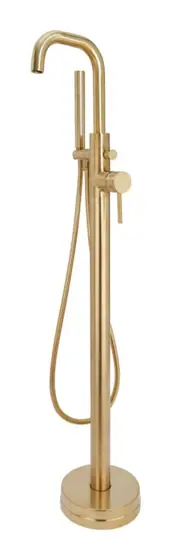
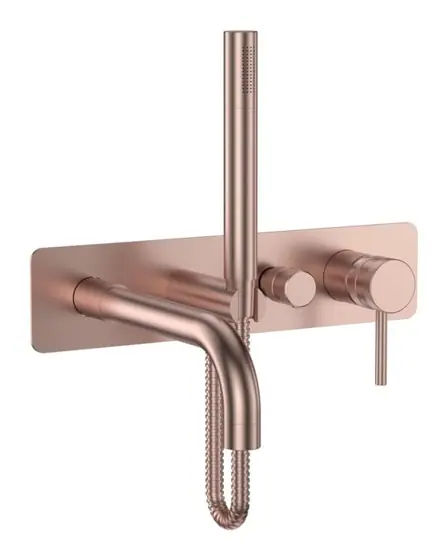
A freestanding bath needs its filler specified at the same time, not afterwards.

  • Floor-standing bath fillers in every stocked finish
  • Deck-mounted and wall-mounted options
  • Freestanding waste and trap kits
  • Pipe shrouds and floor plates
  • Matching towel rail and brassware

If you are tiling the floor underneath, talk to us about the order of work before you buy. Getting a freestanding bath in after a large-format floor is a different job to getting it in before.

Questions people ask

Straight answers

What is the most common bath size?
1700 × 700mm. It fits the standard UK bathroom alcove, so it is the size with the widest choice and the best prices, and almost every panel, screen and shower bath is made to suit it. If your alcove measures 1700 wall to wall, buy a 1700 bath; if it is a touch under, a 1600 or 1500 saves cutting into the wall. Measure before you fall for anything.
P-shape or L-shape shower bath?
Both give you a bath you can shower in properly. P-shape curves outward at the shower end and takes a curved screen; it feels roomier to stand in and suits a softer-looking room. L-shape squares off and takes a flat screen; it looks sharper and is easier to tile around. Pick the one that matches the rest of the room, then get the hand right — left or right depends on which end the taps are and which side the wall is.
Single-ended or double-ended?
Single-ended has the taps and waste at one end and a sloped back rest at the other — the normal family bath, and the cheaper of the two. Double-ended puts the taps and waste in the middle so both ends slope, for two people or just for choosing which way you face. Double-ended needs the taps on the long side or a wall-mounted filler, which affects the plumbing, so decide before the first fix.
Will my floor take a freestanding bath?
A standard 1700mm acrylic bath holds around 200 litres, which with the bath and a person comes to roughly 300kg over the footprint. Most modern joisted floors take that; an older house with a long joist span sometimes needs a check and some noggins. A cast-iron or stone-composite bath can be two or three times that weight and always needs the floor checked first. We ask about the floor before we sell one.
What size freestanding bath fits a normal bathroom?
The standard is 1700 × 700 or 1700 × 750mm. Freestanding needs clearance on at least three sides for cleaning and for the filler, so a 1700 bath wants a room at least 2,000mm long. Where that is tight, 1500 and 1600mm freestanding baths exist and a back-to-wall design gives the look with one side against the wall.
Which tap goes with a freestanding bath?
A floor-standing bath filler, which rises from the floor beside the bath, or a wall-mounted filler if the bath is close to a wall. The pipework for a floor-standing filler has to be in the floor before the tiling, so decide on the tap when you buy the bath, not after the floor is down. We match every filler to the finish of the rest of the room.

Not sure how much you need?

Use the calculator, or bring your measurements in and we'll work out metreage including wastage plus the adhesive, grout and trims to go with it.